


Currently, a huge number of different advertised drugs have appeared on various websites, which, among other things, allegedly help against parasites or helminthic infestations.In fact, the vast majority of such advertising is fake and a complete scam.Medicines for helminthiasis, or diseases caused by parasites, must be prescribed by doctors based on an accurately established diagnosis.Taking preventative medications for parasites is nothing more than a scam.Moreover, there is no such diagnosis as “parasites”.

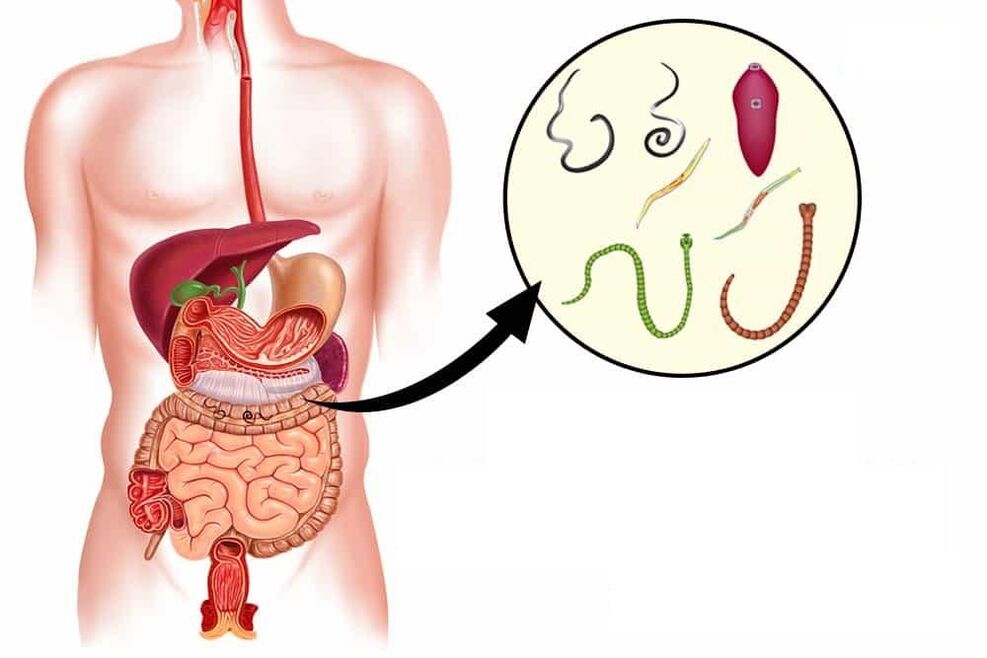
Parasites include insects such as lice, fleas, and scabies mites.Parasites are also protozoa, for example, dysentery amoeba.A huge number of parasites are worms, or helminths.In turn, helminths are divided into round, flat, and tapeworms.An example of parasitic infestation by nematode roundworms is enterobiasis, or carriage of pinworms.Flatworms (trematodes) are cat flukes, the causative agent of opisthorchiasis.Tapeworms are bovine and pork tapeworms, the causative agents of teniarynchosis and taeniasis, as well as broad tapeworm, the helminthic infestation of which is called diphyllobothriasis.
On all the sites that advertise miracle cures for parasites, you will not find a single disease, not a single diagnosis, and not a single name of a specific parasite.However, all these sites contain monstrous, shameless, and aggressive advertising.Here are a few signs of such sites that it is advisable to immediately close and avoid:
- extremely bright appearance of the site itself;
- close-up photographs of the drug packaging;
- mention of certain “secret military” or “space” developments that became known only recently to the general public and put into production, and initially this “food supplement” was developed for “special services contingent in tropical countries,” and so on;
- the presence of famous names of professors, their photographs, as well as photographs of various documents with seals, which are supposedly evidence of the effectiveness and authenticity of the drug.When trying to find these doctors and institutions, as well as carefully examine the seals and document forms, it turns out that these institutions and regulatory organizations simply do not exist, and the names are “fake”;
- the presence of flashy banners about discounts that literally expire in a few hours, and with a countdown;
- an explicit invitation to click on a certain place on the site, a request to enter your own cell phone number or email address, a spell not to leave the site;
- a promise to provide several packages at once as a discount;
- a mandatory attribute of a fake medicine will be a literally screaming statement about its complete naturalness, multi-component secret composition, the absence of any contraindications - from the point of view of the site’s authors, such a drug can be used by any patients, healthy people, as well as children and pregnant and lactating women;
- An extremely characteristic sign of fraud on the Internet will be a suspiciously high price.
- A mandatory attribute of such a fake site is the presence in the most visible place of a large number of extremely positive reviews, interspersed with exclamation marks and gratitude from patients who “cured” themselves, their parents, children, and even cats and dogs from helminthic infestations.However, when you try to add your review, this cannot be done, since all reviews are nothing more than a simple screenshot of a dead picture, with no interactive form;
- In addition, on such a site it is simply impossible to ask a question and find out the owner of this domain.It turns out that the site is secretive, camouflaged, and no official information about the legal entity or company producing or selling this drug simply exists on the site.Thus, it is physically simply impossible to legally contact, submit any information, or make a complaint regarding the quality of this product;
- finally, if the site presents a registration certificate that really exists and is not a hoax, then, most often, we are not talking about any medicine, or even a dietary supplement.The vast majority of such drugs have permission and certificates from the field of cosmetics, and do not even go through registration procedures.
Now that we have dealt with the most important thing and warned our readers about the possibility of deception on the Internet, it is time to talk about who worms and parasites are.We have already said above that there are much more parasites than worms.After all, the protozoan Plasmodium, the causative agent of malaria, which is an intracellular parasite and causes attacks of fever and malarial jaundice, can also be considered a parasite.A dysentery amoeba can be considered a parasite, which can kill a healthy person in just a few days, debilitating him with bloody diarrhea.
Who are worms?
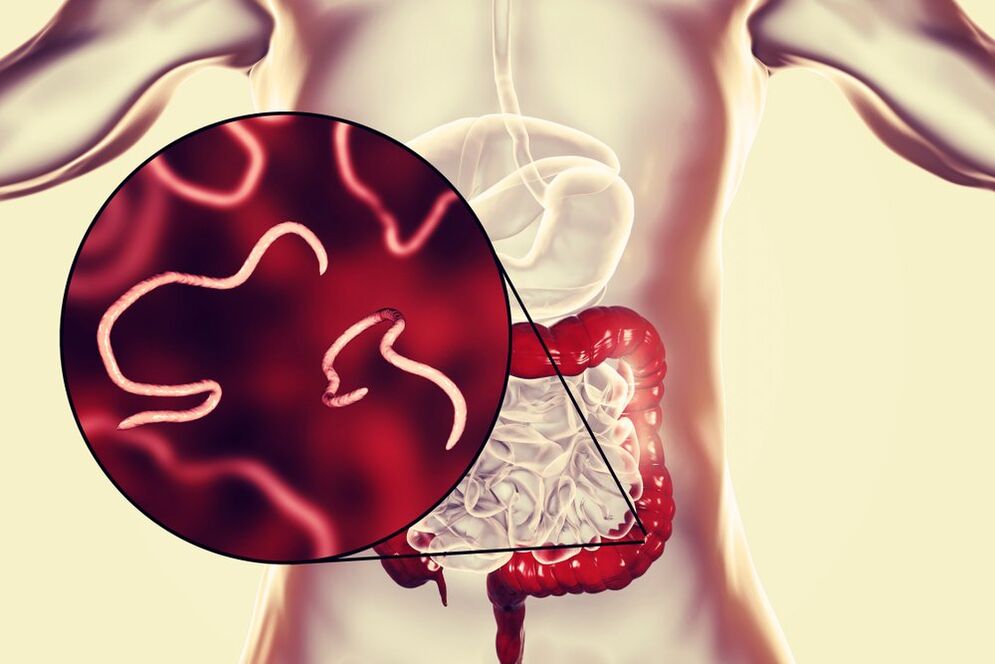
But worms are parasitic worms, and humans are either an intermediate or a definitive host for them.The definitive host is the creature in whose body the parasite multiplies and lays eggs.And the intermediate host is considered to be all those organisms that the parasite sooner or later leaves in order to find the final one.For example, the causative agent of opisthorchiasis, or cat fluke, is “hospitably located” in the human body, as in the body of the definitive host.
A person with opisthorchiasis releases eggs into the external environment with their feces.But another person cannot become infected from a sick person, under any circumstances.After all, the life cycle of opisthorchis is such that these eggs must get into freshwater water, overwinter in freshwater organisms, get into the muscle tissue of fish of the carp family, turn into special life forms - metacercariae, and only then end up on a person’s table in poorly fried or poorly cooked fish meat.This is the only way to become infected, and even if you put dirty hands filled with opisthorch eggs into your mouth, nothing bad will happen.The eggs only become active in freshwater environments.
So, all worms are worms.They can be as small as pinworms, no more than 1 cm in length, and as large as roundworms, which can reach almost a meter in length.Most of the rivers of Western Siberia are a natural reservoir of the above-mentioned opisthorchiasis, where almost 100% of fish from the cyprinid family are infected.
Perhaps the record holders can be considered tapeworms, which reach gigantic sizes.The aforementioned wide tapeworm, which causes diphyllobothriasis in humans, can reach a length of more than 10 meters!And at the same time, its entire body, except for the head, consists of repeating, similarly arranged segments, which mature, tear off from the end of the parasite, and release a huge number of eggs along with feces.Each such segment is devoid of a digestive, nervous system, and is a hermaphrodite, that is, at the same time a set of male and female genital organs, testes and a pregnant uterus, capable of fertilizing itself to produce a large number of eggs.Mature segments have certain muscles, so they can even crawl out of the anus at night and be active for some time.
We can consider that such helminths have reached complete perfection and the highest specialization, since their existence pursues only one single goal: the production of eggs, and existence in conditions that can be considered the most suitable.In the intestinal lumen they are warm and safe, they absorb food through the entire surface of the body, and do not even have a digestive system.But if we think philosophically, then humanity, in terms of the meaning of its existence, is hardly different from the same helminths.The meaning of our existence as a biological species is the reproduction of our own kind, just like any other creatures.Let's talk about which worms are contagious and which are non-contagious.Above we have already begun to talk a little about this using the example of opisthorchiasis.
About contagious and “non-contagious” worms
There is a difference between these concepts: in the body of the definitive host, adult individuals reproduce and lay eggs.But this does not mean that a person who is the source of a large number of eggs is always contagious.Thus, the eggs of the liver fluke, having come out with feces, must necessarily visit a fresh pond, the larval stages must undergo transformations, passing through the body of freshwater mollusks, and only the next year the “young parasites” become dangerous to humans.
Roundworms living in humans constantly lay eggs.But they need at least several weeks to “bask in the sun”, in the upper layers of warm soil, in order to acquire the ability to become infected.The most common way is to eat poorly washed greens.
Perhaps the most curious and sure way was invented by pinworms.They refused the participation of other organisms in their development, the release of eggs into the external environment, and all “tricks”.Crawling out of the anus at night, the female lays eggs near the anus.After a few hours, the “fresh air” activates the eggs, and they cause itching.When scratching, the eggs get under the nails and then into the mouth.This is how a trouble-free closed cycle of self-infection is realized, which ensures the persistence of enterobiasis (as pinworm parasitism is called) in one person and in children's groups.
Lone Wanderers Are Killers
But, alas, even helminths sometimes have problems with reproduction.They are not going to multiply in our body, but gather in another, but they don’t succeed, and they enter our body by accident, and at the wrong time.For example, there is such a disease as trichinosis.You can become infected by eating raw meat, such as frozen bear slices.Once in the human muscles, the larvae curl up there, become encapsulated, and mistake the human body for the body of a wild animal.In the wild, there are many chances that a given animal will be eaten by another, for example, a wolf.And as a result, the larvae from the muscles, under the influence of wolf gastric juice, will pass into his body, and according to the plan, they will live and thrive in him, turning into adult parasites and releasing eggs.
But if a person eats such meat, then there is no longer any way out of the human muscles.Of course, there may be such an insignificant chance that this person suffering from trichinosis will be eaten by someone, for example, by the same wolf, and then the normal life path of trichinosis will be restored.But since this is unlikely to ever happen, such an accidental penetration of Trichinella from bear meat into our body causes a “biological dead end.”And Trichinella never gets anywhere else.
It is possible for a person to simultaneously be not only the final host, but also an intermediate host.We are talking about pork tapeworm, which causes the disease taeniasis: if eggs from the human intestines are thrown up into the stomach, or even higher, for example, along with vomit, then they can cause a lot of trouble.
Once in the gastric juice, the eggs begin to “hatch”, and from them emerge those forms of life that should normally develop in the body of a pig, which can, along with its food contaminated with human feces, consume these eggs.If this happens in the human stomach, if these eggs were abandoned from the small intestine, then the larvae emerging from the eggs pierce the stomach wall, enter the bloodstream, and spread to many organs and systems, and then grow there in the form of blisters, simulating cancerous tumors.This human disease with an intermediate form of pork tapeworm is called cysticercosis.
Cysticerci can mature in the liver, in the brain, mimicking malignant tumors and causing neurological symptoms, or even in the eye.Inside the capsule, the larval stage of the pork tapeworm is surrounded by a thick membrane, and is quite well protected from various medicinal substances, since it is fenced off from the bloodstream.Such stages must be treated surgically; this is a rather complex and lengthy treatment.Unfortunately, even now it does not always end successfully.
Champions of Horror
Perhaps the most dangerous of these creatures are small worms - echinococcus and alveococcus, or more precisely, their larval stages.The “idea” of the parasite (and the final host is canines) is that grass contaminated with wolf feces will be eaten by livestock, the parasite will undergo a development cycle in it, and then the dead or hunted animal will be eaten by a wolf or arctic fox.
But here, too, man stands in the way of nature: rarely, but there are cases of infection when interacting with sick dogs (eggs on the fur), or when removing skins from sick arctic foxes.Once in the human body, echinococcus forms blisters in the organs that grow and can reach the size of a child’s head.At the same time, a liquid is produced inside the bladder that contains poisonous succinic acid, so if the bladder ruptures (for example, due to injury), severe poisoning is possible.
But the worst thing is that inside the bubble, secondary, tertiary, bubbles (daughter, grandchild, and so on) are constantly forming, like “matryoshka dolls”.Each of the bubbles has a head and hooks with suction cups, ready for action.When injured, all this spills out, for example, into the abdominal cavity.
It turns out that it can be even worse.Alveococcus, a parasite of rodents and canines, whose eggs can be carried into the mouth with unwashed root vegetables and herbs, is capable of the most aggressive line of attack: while other parasites, being “submissive to fate,” live quietly in the muscles and internal organs of animals, and wait to be eaten, alveococcus acts.
It brings the demise of the intermediate host closer.From an evolutionary point of view, this is a wise move: the lifespan of the embryo is simply shortened.And the alveococcus does this very gracefully: its bubbles multiply not inside, under a common membrane, but outside.They grow like a sponge, growing and destroying organs and tissues, and therefore the disease is called “parasitic cancer”.
Alveococcosis is the only disease of all caused by “worms” that has an extremely serious prognosis, and in advanced cases, high mortality.
But most helminthic infestations, fortunately, do not proceed like the script of the movie “Alien”, but have clear signs and symptoms that make you see a doctor.What symptoms are we talking about?
Clinical signs of infestations

Of course, a lot depends on the localization, or location of the parasites.In most cases, parasites are found in the intestines, so it is clear that symptoms of helminthic infestations can include various intestinal complaints.But it must be taken into account that upon initial contact with the parasite, the body becomes infected and allergenic, and with long-term cohabitation there may be a completely different clinical picture.Parasites can release toxins, absorb our proteins, fats and carbohydrates, and lead to exhaustion of the patient; they reduce immunity.As shown, long-term, long-term infection with opisthorchiasis significantly increases the chances of developing liver cancer, or hepatocellular carcinoma.What signs indicate acute infection with worms?
Acute symptoms of helminth infection
When a parasite gets acquainted with the human body, the immune system first strains in response to the introduction of unfamiliar substances, which are products of the parasite’s vital activity.Most often there are:
- fever;
- skin itching, including in the anus, urticaria;
- muscle pain;
- cough, difficulty breathing, bronchospasm, shortness of breath may occur;
- abdominal pain, stool instability, diarrhea;
- asthenovegetative symptoms are expressed (weakness, lethargy, decreased performance, drowsiness during the day and insomnia at night);
- anemia;
- the appearance of a skin rash.
The specificity of parasites and their migration routes in the body should be taken into account.So, when infected with pinworms, skin itching constantly accompanies the invasion, and the itching will be in the anus.Myalgia (muscle pain), facial swelling, and intense pain in all skeletal muscles are characteristic of trichinosis, in which parasite larvae are encapsulated in the muscles.
Pulmonary symptoms are characteristic of migrating larvae, which pass through the pulmonary circulation through the bloodstream and settle in the lungs.In some cases, direct microscopy of sputum may reveal parasite particles.This will be direct evidence of invasion, and treatment should begin.
As for abdominal (intestinal) symptoms, they occur most often, since most parasites still have intestinal localization.In young children and malnourished subjects, and especially with a large number of parasites, in addition to abdominal pain and unstable stool, malabsorption syndrome occurs.Due to the influence of the parasite’s toxins, appetite decreases, and the parasite “appropriates” everything obtained by the owner.
Anemia is a characteristic sign of intestinal localization of parasites that can injure the intestinal wall.Thus, many tapeworms, in addition to suckers, have hooks to stay in one place, and parasites such as hookworms (roundworms), sucking in the human intestines, feed on his blood.The result is dizziness, decreased blood pressure, drowsiness, decreased temperature, pallor, a sharp decrease in exercise tolerance, and shortness of breath.
Naturally, in young children all symptoms are more pronounced than in adults.
How to behave so as not to get infected?

In conclusion, I would like to give some simple tips that will help you avoid infection and become a host of helminths:
- always thoroughly wash vegetables and fruits, especially greens, in places where soil may accumulate;
- when traveling and hiking, drink only bottled water;
- after washing, it is advisable to scald the greens with boiling water, and use drinking water for washing;
- it is necessary to fight flies, especially to prevent them from crawling on food, covering them with muslin;
- wash your hands thoroughly before eating, and teach your children this, do not bite your nails and do not put your hands in your mouth;
- you should not drink raw water, and try not to swallow it when swimming in fresh water;
- do not walk barefoot in the tropics;
- do not swim in freshwater tropical lakes, even if locals swim in them;
- do not eat stroganina made from raw meat (especially venison and bear meat), this can lead to infection with trichinosis;
- fish must be thoroughly baked, boiled or fried for at least an hour, especially the carp family: bream, carp, crucian carp, carp, ide, etc.;
- Do not eat meat from pigs and cows that have not passed veterinary control.
In conclusion, it should be said that the use of anthelmintic or anthelmintic drugs for prevention, as well as in the form of self-medication, is a bad idea.For example, if a person has pinworms and intense itching in the anus, then drug treatment alone is not enough.At night, when a person is sleeping, he will mechanically comb the anus area and drive the eggs laid that night under his fingernails.
If he takes the drugs, he will still have eggs under his nails, and sooner or later they will end up in his mouth.Thus, despite treatment, the mechanism of self-infection will persist, and such treatment will be useless.In order to prevent pinworms from laying eggs on the skin of the anus, when treatment is prescribed for children, a tampon lubricated with Vaseline is placed in the anus at night.Pinworms cannot overcome this natural barrier and cannot lay eggs; they are exposed to the drug and die.
And if at the same time the child has short-cropped nails, if he is accustomed to washing his hands and brushing off dirt from under his nails, if bed linen is regularly changed and ironed with steam, and if not only the child is treated, but also all the adults living with him, then the chance of a successful cure increases many times over.Therefore, before making irresponsible independent attempts to “deworm”, you must definitely visit an infectious disease specialist, be examined, establish an accurate diagnosis and follow the instructions of specialists.